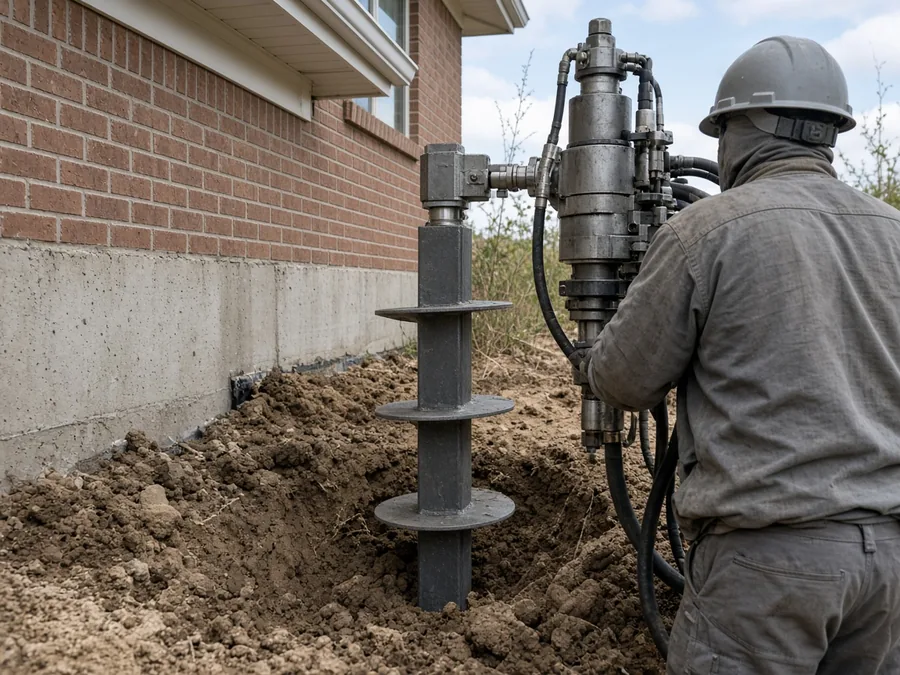
Usually yes. Angi’s guide says that as a rule of thumb, if your home was safe to live in before the repairs, you can usually live there during them. The exceptions are houses with severe damage that a structural engineer deems unfit to occupy. Expect noise, some vibration and crew members in the house.
What to expect while the crew works
- Noise. Angi says to expect loud noises from drills and excavation equipment, plus creaking in the structure as it adjusts to movement below.
- Vibration. Sources differ in emphasis: Angi says you might feel slight vibrations, while Concrete Network says you are unlikely to feel vibrations during lifting. Either way, plan for a disruptive few days.
- People inside the house. Angi notes that contractors may need to be in your living space to access the slab, basement or crawl space, and that if the house is being jacked up and piers installed, a crew member may be inside watching progress. Concrete Network describes a crew member entering the home during lifting to monitor it.
- Access to the outside. Concrete Network says most of the work to raise a settled foundation happens on the exterior and that some landscaping may need to be removed to reach the foundation perimeter. Ask which rooms or areas, if any, need to be cleared.
How long is the disruption?
Angi says most foundation repairs take one to three days, with small jobs such as sealing cracks or mudjacking often about one day and underpinning or drainage work about two to three days. Angi’s separate timeline article puts many repairs at two to three days and says pier installation can take a week or more. Angi’s timeline article adds that repairs involving poured concrete piers and excavation may take several weeks and may mean you can’t stay in the house. Concrete Network says underpinning can take a week or longer, with an experienced crew installing four or more piers a day and the lifting itself taking a day or two. These are national descriptions, so the contractor’s written schedule for your house is the figure that matters.
When you should not stay
Angi says that with extreme structural damage, such as differential settlement, sinking foundations or collapsed foundation walls, a structural engineer will likely deem the house unfit and may require you to move out until it is repaired. If you are unsure whether the house is safe, ask an engineer in writing rather than relying on a sales visit. See when to call a structural engineer.
Questions to ask the contractor before you decide
- How many working days is the job, and what happens if rain or a utility conflict delays it?
- Which rooms or crawl-space areas need access, and will anyone need to be inside while lifting?
- Will water or power be interrupted at any point?
- Who is responsible for repairing any interior finishes disturbed by the work?
- Will an engineer or the city inspect the work? See permits in Waxahachie and Ellis County.
Those are questions to put in the written scope, not published rules. Our quote checklist shows where the answers belong.
Does insurance pay if you have to move out?
Only if the damage is covered. The Texas Department of Insurance says additional living expenses coverage pays rent, food and other extra costs if you must move while your house is repaired for damage your policy covers, up to your policy’s limits. Most foundation work caused by clay movement is not covered damage, so do not assume a hotel will be reimbursed. See does homeowners insurance cover foundation repair in Texas?